
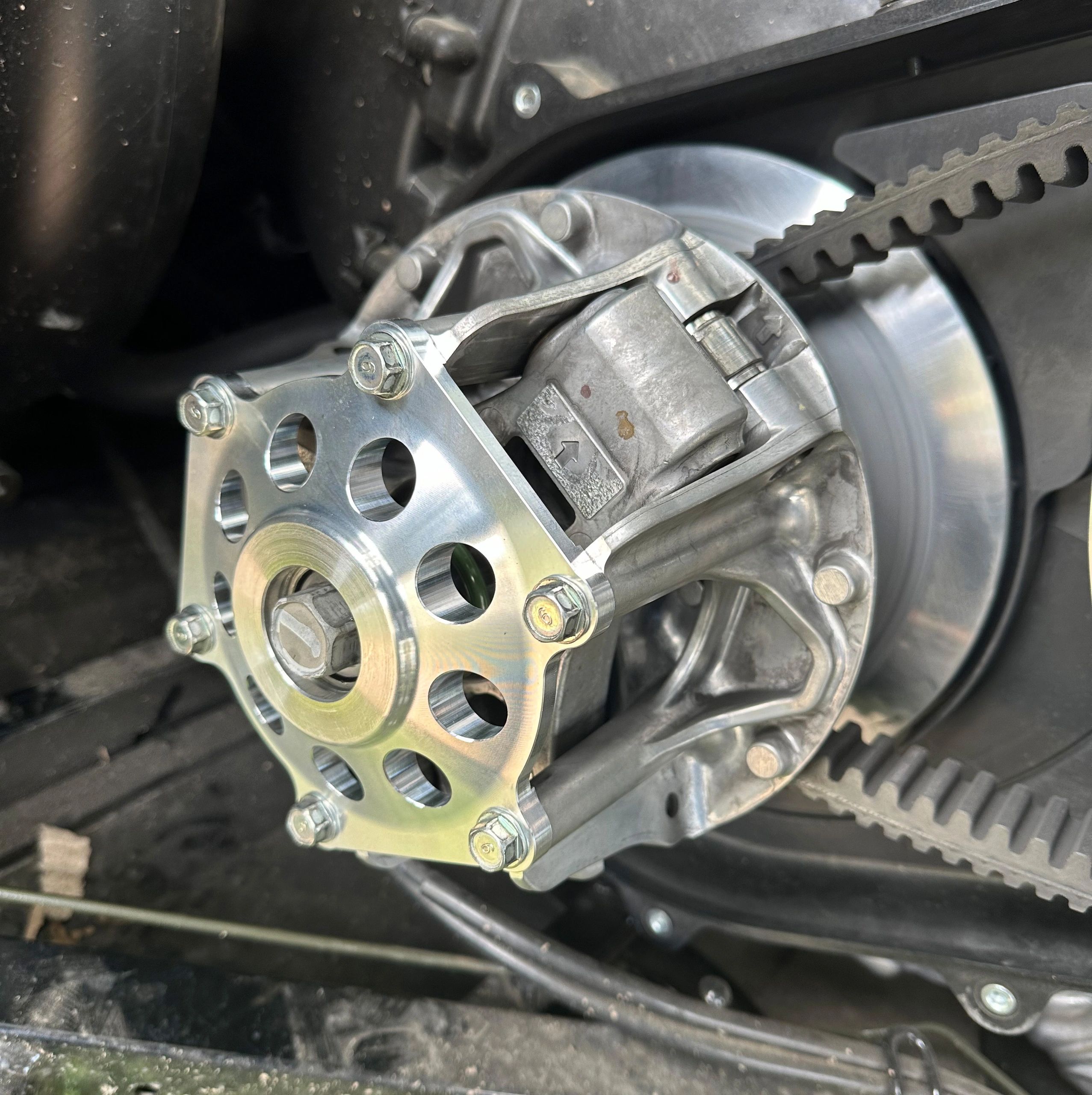
If you have a Kawasaki Ridge, you may be having some clutch issues, want lower cruising RPM, and/or want better performance. This post will go over common issues and our fixes.
1. Primary Center Bushing Sticking(sudden higher than normal engagement): The center bushing of all CVT clutches can be an issue as debris can pack into them, and hang the clutch up. This usually happens with the clutch at the idle position, with the movable sheave furthest away from the motor as it sits without it running. We have found blowing this out, lubricating, and using brake clean will greatly help this issue. To do this, remove your clutch cover and 6 bolt primary spring plate (12mm head). Also remove your belt. Push the primary clutch movable half all the way towards the motor. Blow this out very well with compressed air, then take lubricant like WD-40 or Kroil and spray the bushing. Now work the clutch back/forth many times. Make sure you pull the clutch all the way towards you when doing this as that is where they are known to stick. When the clutch feel free, brake clean all excess lubricant off the clutches and reassemble.
2. AA clutch kit and overdrive cover: Our kit will engage smoother, cruise at a lower RPM, gain horsepower, and last longer. It’s a huge win for clutch kits as this does so much to transform the Ridge. See this link or more info: https://aftermarketassassins.com/products/ols/products/2024-up-kawasaki-ridge-1000-s1-clutch-kit
3. Primary weight sticking (high/jerky engagement all of a sudden). If this is happening, the weights may be sticking to the pins due to buildup/debris. Remove the clutch weights and clean with brake clean. Use scotch brite to clean the pin up very well. With our AA weights, you can use a small wire brush or dremel tool with a sand roll to clean the ID of the weight that the pin goes through. Reassemble with a very thin layer of grease on the ID of the weight.
4. Secondary belt deflection adjustment(belt squeal when taking off, high engagement, jerky engagement): Adjusting belt deflection is important as after the belt breaks in as they will stretch a bit. Giving the belt less slack will make everything work better, but you can go too far. You want to make sure your primary does not turn your secondary when at idle in neutral. See image below and circled in red is the deflection shim. The thinner the shim, the tighter the belt will be. See this VIDEO
